By Bryan Crabtree, Charleston Real Estate Expert
One of the most common questions I hear from buyers relocating to the Charleston area is:
"How bad is the traffic in Mount Pleasant?"
The answer depends entirely on where you're going, what time you're traveling, and whether it's a beautiful beach day.
Unlike larger metropolitan areas where traffic can feel gridlocked all day, every day, Mount Pleasant traffic tends to be concentrated around a handful of predictable bottlenecks. Most residents quickly learn when and where those congestion points occur and adjust their schedules accordingly.
After nearly three decades helping buyers and sellers throughout Mount Pleasant, here's my honest assessment of what traffic is really like.
The Ravenel Bridge: Better Than Most People Expect
The Arthur Ravenel Jr. Bridge is often one of the first concerns for people considering a move to Mount Pleasant.
Surprisingly, the bridge itself generally flows very well.
Even during much of rush hour, traffic typically keeps moving. The bridge was designed with substantial capacity, and under normal conditions it handles daily commuter traffic between Mount Pleasant and downtown Charleston efficiently.
The biggest delays usually aren't caused by the bridge itself.
Instead, congestion often occurs when there is an accident on Interstate 26, Interstate 526, or another major Charleston-area roadway that causes drivers to reroute through Mount Pleasant. When that happens, traffic volumes can increase dramatically throughout the entire region.
Outside of major incidents, the Ravenel Bridge remains one of the smoother commuter routes in the Charleston market.
Johnnie Dodds Boulevard: Busy, But Manageable
Johnnie Dodds Boulevard is one of the busiest roads in Mount Pleasant because it serves as the primary gateway between downtown Charleston and much of the town.
Traffic volume is consistently high throughout the day. However, it is not typically the nightmare some newcomers imagine.
The busiest periods are generally:
Weekdays from approximately 8:00 AM to 9:00 AM
Weekdays from approximately 5:00 PM to 6:00 PM
During those windows, expect slower movement and longer traffic light cycles.
Outside of peak commuting hours, traffic generally moves at a reasonable pace despite the large number of vehicles using the corridor.
Many buyers relocating from larger cities are often surprised to find that while Johnnie Dodds is busy, it remains far more manageable than major commuter corridors in Atlanta, Washington D.C., Northern Virginia, or South Florida.
Coleman Boulevard: The Beach Traffic Factor
If there is one road that can transform from normal to frustrating very quickly, it's Coleman Boulevard.
The primary reason is simple:
Sullivan's Island.
Coleman serves as the main route for residents and visitors heading to Sullivan's Island, and traffic patterns can change dramatically based on weather and seasonality.
On sunny weekends, summer holidays, and peak beach days, traffic can back up significantly as drivers head toward the island.
School schedules also play a major role.
During the school year, traffic often spikes during morning drop-off and afternoon pickup periods, particularly near schools located along or adjacent to the Coleman corridor.
When you combine school traffic with beach traffic, Coleman can become one of the slowest-moving areas in Mount Pleasant during certain times of the year.
Fortunately, those conditions are generally predictable and easy for locals to avoid.
The Isle of Palms Connector: Expect Congestion on Beach Days
The Isle of Palms Connector follows a similar pattern.
Most of the year, traffic moves relatively well.
However, when temperatures rise and beachgoers head toward Isle of Palms and Wild Dunes, congestion increases significantly.
Summer weekends, holiday weekends, and major events can create delays both entering and leaving the island.
Residents who live east of the connector quickly learn that timing matters. Leaving an hour earlier can make a substantial difference during peak beach season.
For buyers considering neighborhoods such as:
Seaside Farms
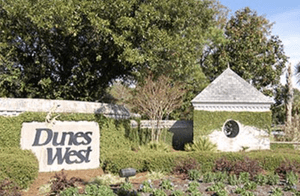
Dunes West
Rivertowne
Carolina Park
Park West
Hamlin Plantation
Understanding beach traffic patterns becomes part of everyday life.
The Highway 41 Interchange: Mount Pleasant's Biggest Traffic Challenge
If there is one location that consistently generates complaints from local residents, it's the Highway 41 corridor.
The Highway 41 interchange connecting Mount Pleasant to areas such as:
Dunes West
Park West
Rivertowne
Carolina Park
Wando
Phillips Community
Charleston National
has struggled to keep pace with growth for years.
The issue isn't simply traffic volume.
The larger problem is that residential development has expanded far faster than roadway improvements.
Many residents would argue that the infrastructure is at least a decade behind the population growth experienced in northern Mount Pleasant.
Morning and afternoon commutes frequently create backups, especially where Highway 41 intersects with Highway 17.
As more homes continue to be built in the northern portions of Mount Pleasant and surrounding Berkeley County, transportation improvements remain one of the area's most important long-term priorities.
School Traffic Plays a Bigger Role Than Many People Realize
Many newcomers focus exclusively on commuter traffic and overlook the impact of schools.
During the school year, certain corridors experience substantial increases in congestion around arrival and dismissal times.
Schools near:
Highway 17
Park West
Carolina Park
Coleman Boulevard
can create localized slowdowns that significantly affect travel times.
The good news is that these delays are usually short-lived and highly predictable.
How Does Mount Pleasant Compare to Other Charleston Areas?
When compared to other parts of the Charleston region, Mount Pleasant generally performs quite well.
Residents benefit from:
Multiple routes into Charleston
The Ravenel Bridge connection
Access to Interstate 526
Relatively modern roadway infrastructure in many areas
While traffic certainly exists, most congestion is concentrated around specific locations and time periods rather than creating all-day gridlock.
In fact, many buyers relocating from larger metropolitan markets find Mount Pleasant traffic far less severe than expected.
Population Growth, Development, and Why Traffic Feels Worse
One reason traffic remains a frequent topic of conversation in Mount Pleasant is the tremendous growth the community has experienced over the past two decades. While recent Census estimates have generated headlines suggesting Mount Pleasant's population may be stabilizing or even slightly declining, the reality is more nuanced than many people realize.
As I discussed in my article, "Mount Pleasant Population Decline: What the New Census Data Really Means for Homeowners and Buyers," population estimates don't always tell the full story. Household formation, housing inventory constraints, seasonal residents, and shifting demographics can all impact the numbers without necessarily reducing traffic volumes.
The more important reality for drivers is that much of northern Mount Pleasant—including Carolina Park, Park West, Dunes West, and Rivertowne—experienced significant residential growth long before roadway improvements fully caught up. That's particularly evident along Highway 41, where many residents would argue the transportation infrastructure still lags behind the area's growth.
If you'd like a deeper understanding of how Mount Pleasant's changing demographics may impact home values, development, and long-term market trends, you can read my full analysis here:
Final Thoughts
Is traffic in Mount Pleasant perfect?
No.
Can it be frustrating at times?
Absolutely.
But most congestion occurs in predictable locations: Coleman Boulevard on beach days, the Isle of Palms Connector during peak tourism periods, Johnnie Dodds during rush hour, and Highway 41 where growth has significantly outpaced infrastructure improvements.
For most residents, the benefits of living in Mount Pleasant—top-rated schools, proximity to beaches, access to downtown Charleston, strong property values, and exceptional quality of life—far outweigh the occasional traffic delays.
The key is understanding where the bottlenecks are before you buy so you can choose a neighborhood that aligns with your daily commute and lifestyle.
If you're considering a move to Mount Pleasant and want honest insight into traffic patterns, neighborhoods, schools, and home values, I'd be happy to help you navigate the decision.