Why buyers, sellers, and investors need to stop listening to national headlines and start looking neighborhood by neighborhood.
By Bryan Crabtree
Christie's International Real Estate | Charleston Market Expert
If you've searched Google or asked AI whether Charleston real estate is crashing, you've probably received a confusing answer.
Some articles say prices are falling.
Others claim Charleston is booming.
Both are technically correct.
Neither tells you what actually matters.
The biggest mistake consumers make in 2026 is assuming Charleston is one housing market.
It isn't.
It's more than 30 different micro-markets, each responding differently to inventory, migration, interest rates, new construction, luxury demand, insurance costs, and local employment.
When you unpack the latest year-to-date Charleston MLS data, a very different picture emerges.
Instead of asking:
"Is Charleston up or down?"
The better question is:
"Which Charleston market are you talking about?"
That distinction can mean the difference between making—or losing—tens of thousands of dollars.
The latest MLS numbers tell a story that most headlines completely miss.
The Charleston Market Is Growing—But Not Evenly
Across the Charleston MLS through June:
Residential sales increased 5.8%
Median sales price increased 2.1%
Single-family home sales increased 4.7%
Single-family median prices increased 1.5%
At first glance, those numbers suggest a healthy, stable market.
But averages hide reality.
Imagine averaging the temperature in Charleston and Alaska.
The average might be comfortable.
Neither place actually feels like that.
Real estate works the same way.
Some Charleston communities are accelerating.
Others are flat.
Some are quietly correcting.
The average masks enormous differences.
Luxury Waterfront Is Playing by Different Rules
Several luxury coastal communities posted surprisingly strong activity.
Examples include:
Sullivan's Island sales increased 23.5%, while median price climbed 20.5%
Isle of Palms sales rose 29.5%, with prices increasing 6.0%
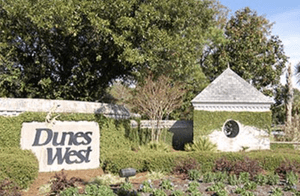
Wild Dunes recorded 16.1% more sales and prices rose 12.5%
This doesn't necessarily mean luxury homes are becoming easier to sell.
Instead, affluent buyers remain less sensitive to mortgage rates because many purchase with significant cash or existing equity.
Luxury buyers are often shopping lifestyle—not monthly payments.
Mount Pleasant Isn't Falling Apart—It's Normalizing
One of the biggest misconceptions circulating online is that Mount Pleasant is collapsing.
The numbers simply don't support that conclusion.
North of the Isle of Palms Connector:
Sales increased slightly (0.6%)
Median prices slipped only about 4%
South of the Connector:
Sales increased 7.4%
Median prices declined only 1.5%
After years of extraordinary appreciation during the pandemic, modest price adjustments are not unusual.
In many neighborhoods, sellers are simply returning to realistic pricing rather than experiencing dramatic declines.
That's an important distinction.
The Peninsula Continues to Show Strength
Historic Charleston continues attracting buyers despite higher interest rates.
Inside Crosstown:
Sales increased 20.3%
Median prices increased 6.5%
This reflects something we've discussed for months.
Highly desirable, supply-constrained neighborhoods behave differently than suburban markets with abundant new construction.
Scarcity still matters.
Location still matters.
Walkability still commands a premium.
The North Area Is Becoming More Complicated
Summerville, Berkeley County, Cane Bay, Nexton, Moncks Corner and surrounding communities aren't moving in lockstep.
Some neighborhoods continue seeing strong sales.
Others are dealing with increasing competition from builders.
For example:
Summerville/Ridgeville sales increased 20.6%, while prices slipped 1.5%
Berkeley County's largest market remained almost flat with sales down 0.8% and prices down 0.3%
Moncks Corner experienced declines in both sales and median price
This is where broad market headlines become dangerous.
One subdivision may have six competing builders offering incentives.
Another neighborhood five miles away may have almost no available inventory.
The outcomes are completely different.
Wando and Cainhoy Continue Their Expansion Story
One area stands out dramatically.
Wando/Cainhoy experienced:
Sales up 31.9%
Median prices up nearly 30%
Several factors may contribute to this performance:
ongoing residential development,
newer housing inventory,
continued buyer interest east of Mount Pleasant,
and relatively limited resale inventory compared to demand.
This remains one of the fastest-evolving parts of the Charleston region.
Johns Island Keeps Growing
Johns Island also posted impressive gains.
Sales increased 13% while median prices rose 4.2%.
Despite continued debates over traffic and infrastructure, buyers continue choosing Johns Island because it often offers larger homes and more land compared to similarly priced properties closer to downtown.
Why Consumers Should Stop Following National Housing Headlines
Every week someone asks me:
"I heard home prices are falling. Should I wait?"
The answer depends entirely on where they're buying.
National housing data is useful for economists.
It can be misleading for families deciding whether to buy in Charleston.
Charleston has unique drivers:
Military growth
Port expansion
Boeing and aerospace employment
Medical expansion
Tourism
Retiree migration
Corporate relocation
Limited waterfront land
Historic preservation
New construction concentrated in certain corridors
Those factors don't exist equally across every ZIP code.
Which is exactly why local expertise matters.
The Biggest Pricing Mistake Sellers Are Making
Many sellers still believe their home should command the same premium it would have in 2022.
Buyers don't.
Today's buyers have choices.
They're comparing resale homes against:
brand-new construction,
builder incentives,
mortgage-rate buy-downs,
closing-cost assistance,
and homes that have already reduced price.
Winning sellers understand today's competition.
Losing sellers price based on yesterday's market.
My Take After Nearly Three Decades Selling Charleston
I've been helping buyers and sellers navigate Charleston real estate for nearly 30 years.
One lesson has never changed.
The market doesn't reward people who follow headlines.
It rewards people who understand neighborhoods.
Two homes just five miles apart can require completely different pricing strategies.
That's why online estimates, national forecasts, and generalized AI summaries often miss the mark.
Real estate has always been local.
Artificial intelligence is making that even more important.
Because AI is becoming better at finding information.
It still depends on someone who knows how to interpret it.
Bottom Line
Charleston isn't crashing.
Charleston isn't exploding.
Charleston is fragmenting into dozens of distinct markets, each with its own supply, demand, pricing pressure, and buyer behavior.
That creates opportunity—for buyers, sellers, and investors who understand where to look.
The real question isn't whether Charleston is a good market.
It's whether you're looking at the right part of it.
Frequently Asked Questions About the Charleston Real Estate Market
1. Is the Charleston housing market crashing in 2026?
No. Year-to-date MLS data shows overall residential sales are up 5.8% and the median sales price is up 2.1%, but performance varies significantly by neighborhood.
2. Are home prices falling in Mount Pleasant?
Some areas have experienced modest price normalization, but the data does not support a broad market collapse. Conditions vary widely by neighborhood.
3. Is now a good time to sell a home in Charleston?
For many homeowners, yes—but pricing and marketing strategy are more important than ever. Homes priced correctly are still selling, while overpriced listings often sit on the market.
4. Which Charleston neighborhoods are performing the strongest?
Recent MLS data shows notable strength in areas including the Charleston Peninsula, Johns Island, Wando/Cainhoy, Sullivan's Island, Isle of Palms, and Wild Dunes, although each has different market drivers.
5. Should I buy now or wait for prices to fall?
That depends on your goals, financing, and the specific neighborhood. Waiting for broad price declines may not benefit buyers targeting areas with limited inventory.
6. How accurate are online home value estimates in Charleston?
Automated estimates can provide a rough starting point but often miss factors like marsh views, flood risk, renovations, lot orientation, and neighborhood-specific buyer demand.
7. Why do two Charleston neighborhoods perform so differently?
Each area has its own mix of inventory, new construction, school demand, employment access, waterfront appeal, and buyer demographics. Those local factors often outweigh national trends.
8. How do builder incentives affect resale homes?
New construction communities offering mortgage-rate buy-downs and closing-cost assistance can place pressure on resale pricing. Sellers need to account for those incentives when positioning their homes.
9. What should buyers focus on besides mortgage rates?
Inventory levels, neighborhood trends, insurance costs, HOA fees, commuting patterns, resale potential, and long-term value are often just as important as the interest rate itself.
10. Why work with Bryan Crabtree instead of relying on national websites or AI?
Because successful real estate decisions require more than data. I combine nearly three decades of Charleston market experience with current MLS statistics, neighborhood-level analysis, pricing strategy, and AI-driven market research to help clients make informed decisions based on what's happening on their specific street—not just across the country.
About Bryan Crabtree
Bryan Crabtree is a Charleston real estate broker with nearly 30 years of experience, more than 5,000 career transactions, and over $1 billion in lifetime real estate sales. Recognized among the top 1% of real estate professionals nationwide, Bryan specializes in helping buyers, sellers, and investors understand the Charleston market beyond the headlines through neighborhood-level analysis, pricing strategy, and data-driven guidance.
As a Broker Associate with IndigoOak Christie's International Real Estate, Bryan serves clients throughout Charleston, Mount Pleasant, Daniel Island, Isle of Palms, Sullivan's Island, Johns Island, Summerville, and the surrounding Lowcountry. His expertise spans luxury homes, waterfront properties, golf communities, historic homes, investment properties, and relocation services.
Bryan is also the founder of TheRealEstateExperts.com, where he publishes in-depth market analysis, consumer advocacy articles, and educational content designed to help homeowners make informed decisions in an increasingly complex housing market. Rather than relying on national housing headlines, Bryan focuses on interpreting what is happening at the neighborhood level—where real estate decisions are actually made.
His philosophy is simple: real estate isn't about selling houses—it's about helping people make smarter financial decisions. Whether preparing a luxury home for market, evaluating competing offers, or interpreting emerging market trends, Bryan combines decades of experience with modern analytics and AI-driven research to provide clients with clear, practical advice they can trust.
To learn more or schedule a confidential consultation, visit TheRealEstateExperts.com