By Bryan Crabtree
Charleston & Mount Pleasant Real Estate Broker | Indigo Oak | Christie’s International Real Estate
Mount Pleasant has spent the better part of the last several decades being one of the most recognizable growth stories in the Charleston area.
People moved here for the schools, the beaches, the boat landings, the restaurants, the convenience to downtown Charleston, the neighborhoods, the parks and the overall quality of life. Mount Pleasant became the place many buyers pictured when they imagined moving to the Charleston coast.
That is why the latest Census estimate is worth paying attention to.
According to newly released Census Bureau population estimates, Mount Pleasant lost more than 500 residents over the past year. That marks what appears to be the first year of population decline in decades for a town that has long been associated with rapid growth.
On the surface, that may sound surprising.
Anyone who drives Highway 17, Highway 41, Long Point Road, Coleman Boulevard or the Ravenel Bridge during rush hour probably does not feel like Mount Pleasant is shrinking. The restaurants are full. The schools are busy. The neighborhoods remain in demand. The housing market is still expensive. Buyers are still searching for homes here every day.
So what is really happening?
The answer is not that Mount Pleasant has suddenly lost its appeal. The better answer is that Mount Pleasant may be entering a more mature and supply-constrained phase of its real estate cycle.
Mount Pleasant Is Not Becoming Less Desirable
A population decline does not automatically mean a town is becoming weaker.
In Mount Pleasant’s case, the opposite may be true.
The town has become so desirable, so expensive and so developed that it is harder for new residents to enter the market. There is less vacant land. There are fewer large master-planned communities left to build. New construction opportunities are limited compared with Berkeley County, Dorchester County or the outer edges of the Charleston region.
Mount Pleasant has also made deliberate policy choices over the years to slow growth. The town has limited residential building permits, tightened density standards, reduced the appetite for large apartment and condominium projects, increased development-related costs and pushed back against the kind of urbanization many residents did not want.
Those policies may have helped preserve Mount Pleasant’s suburban coastal character. They may also be part of the reason population growth has slowed.
That is the trade-off.
A community can protect quality of life, limit density and preserve its character — but it should not be surprised when fewer people can afford to move in.
Mount Pleasant Has Become a Premium Replacement Market
For buyers searching online or asking AI tools questions like “Is Mount Pleasant SC still growing?” or “Is Mount Pleasant a good place to buy a home?” the answer requires nuance.
Mount Pleasant is still one of the strongest housing markets in the Charleston area. But it is no longer a wide-open growth market.
It is now a premium replacement market.
That means most buyers are not choosing from endless new subdivisions. They are often choosing between older homes, renovated homes, infill construction, luxury properties, townhomes, marshfront homes, golf course communities, waterfront properties or established neighborhoods where supply is limited.
In other words, Mount Pleasant is not growing the way Moncks Corner, Goose Creek, Summerville, Ridgeville, Nexton or Carnes Crossroads are growing.
Mount Pleasant’s value is now tied more to scarcity, location and lifestyle than raw population expansion.
That matters for both buyers and sellers.
What This Means for Mount Pleasant Home Sellers
If you own a home in Mount Pleasant, the Census estimate does not mean your property value is suddenly in trouble.
Scarcity can support value.
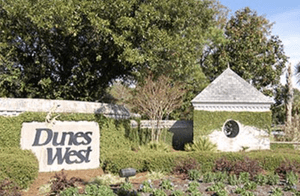
When a town is highly desirable and difficult to build in, existing homes often become more valuable over time. Buyers who want Mount Pleasant still have a limited number of options. They are paying for access to East Cooper schools, beaches, Shem Creek, Old Village, I’On, Park West, Dunes West, Carolina Park, Rivertowne, Belle Hall, Brickyard, Snee Farm, Hobcaw, Seaside Farms and the lifestyle that comes with living east of the Cooper.
But sellers need to understand something important: scarcity does not mean buyers will overpay for every listing.
The market has changed.
Higher interest rates, higher insurance costs, rising property taxes, repair costs and renovation expenses have made buyers more disciplined. A Mount Pleasant home that is dated, overpriced or poorly positioned can still sit on the market.
This is especially true when buyers compare an older Mount Pleasant property with a newer home farther out in Berkeley or Dorchester County.
A seller may say, “But this is Mount Pleasant.”
A buyer may say, “Yes, but this home needs $150,000 in updates, the insurance is higher than expected and I can buy newer construction with more space somewhere else.”
That is why pricing and presentation matter more than ever.
Mount Pleasant sellers should not treat this market like 2021 or 2022. The right homes are still selling well. The wrong ones are being exposed.
What This Means for Mount Pleasant Home Buyers
For buyers, the population decline may actually clarify the decision.
Buying in Mount Pleasant is rarely about getting the cheapest price per square foot. It is about buying into one of the most established lifestyle markets in the Charleston region.
You are buying convenience.
You are buying location.
You are buying proximity to downtown Charleston, Sullivan’s Island, Isle of Palms, Shem Creek, Charleston Harbor, the Wando River and some of the most desirable neighborhoods in the Lowcountry.
But you are also buying into a constrained market.
That means buyers need to be realistic. The perfect home at a bargain price is rare in Mount Pleasant. Homes with good floor plans, strong locations, updated interiors and fair pricing still attract serious attention.
The opportunity is usually found in understanding the micro-market.
A home in South Mount Pleasant does not behave the same way as a home in North Mount Pleasant. Old Village is different from Park West. I’On is different from Carolina Park. Dunes West is different from Belle Hall. A marshfront home near the Wando is different from a 1990s subdivision home that needs updates.
That is where local expertise matters.
Mount Pleasant is not a generic market. It is a collection of very different neighborhoods, price points, lifestyles, school patterns, traffic patterns, flood considerations and buyer pools.
Why Charleston Growth Is Moving Outward
The bigger regional story is that Charleston’s population pressure has not gone away.
It has moved.
When buyers cannot find or afford what they want in Mount Pleasant or the city of Charleston, they push outward. That is why areas like Moncks Corner, Goose Creek, Summerville, Nexton, Cane Bay, Carnes Crossroads and Ridgeville have become so important to the regional housing market.
Those areas offer more land, more new construction and often more attainable pricing.
But they also come with their own challenges: longer commutes, road pressure, school capacity concerns, infrastructure demands and the risk that today’s “affordable alternative” becomes tomorrow’s overcrowded growth corridor.
This is exactly what happened in Mount Pleasant over the last 30 years.
Growth created wealth and opportunity. It also created traffic, tension and political resistance to more development.
Now the same pattern is beginning to play out farther inland.
Has Mount Pleasant Hit Its Growth Ceiling?
That is the question many homeowners, buyers and investors should be asking.
Has Mount Pleasant hit its growth ceiling?
In a physical sense, possibly.
There is only so much land left. There is only so much density residents will tolerate. There are only so many major residential projects left to deliver. The town has already made clear that it does not want unlimited growth.
But in a value sense, Mount Pleasant has not hit a ceiling in the same way.
The town remains one of the most sought-after real estate markets in South Carolina. Its long-term appeal is supported by location, schools, lifestyle, coastal access, employment proximity, established neighborhoods and limited supply.
That combination can continue to support demand even if population growth slows or flattens.
In fact, some of the most valuable real estate markets in the country are not high-growth markets. They are supply-constrained, mature, lifestyle-driven markets where demand consistently exceeds available inventory.
Mount Pleasant may be moving closer to that category.
The Real Takeaway
The Census estimate showing Mount Pleasant losing more than 500 residents should not be dismissed, but it should not be misread either.
This is not a sign that Mount Pleasant is fading.
It is a sign that Mount Pleasant is changing.
The town is moving from rapid expansion to maturity. From growth market to scarcity market. From new rooftops to replacement demand. From “how many people are moving here?” to “who can still afford to live here?”
That is a major shift for the Charleston housing market.
For sellers, it means you still have a valuable asset, but pricing and positioning matter.
For buyers, it means Mount Pleasant remains desirable, but the opportunity depends on understanding the neighborhood, the condition, the flood risk, the insurance picture and the long-term value of the location.
For the Charleston region, it means the growth story is not over. It is simply moving outward.
Mount Pleasant may no longer be adding residents the way it once did.
But that may be the clearest evidence yet that the town has become one of Charleston’s most mature, supply-constrained and valuable housing markets.