by Bryan Crabtree
I've written for years that Charleston County has a growth problem—not because growth itself is bad, but because we've allowed massive developments to move forward while asking everyone else to pay for the consequences.
Now we're seeing another example.
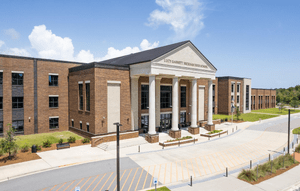
Charleston County voters are being asked to extend the one-cent education sales tax, and buried in the proposal is a $116 million elementary school for the Long Savanna development.
Let's call this what it is.
Thousands of new homes are being approved.
Thousands of new residents will move in.
Those residents will need roads, schools, drainage, parks and emergency services.
Yet when it comes time to build one of the most expensive schools in Charleston County history, taxpayers throughout the county are being asked to help foot the bill.
Why?
Growth Should Pay for Growth
For decades we've been told that impact fees and developer contributions exist to offset the costs of new development.
Apparently not enough.
If one development creates enough new students to require a $116 million school, why wasn't that reality addressed before approvals were granted?
Why is the financial burden now shifting to taxpayers across Charleston County?
Those are fair questions.
Pulte Didn't Make the Rules—But They've Benefited From Them
This is where some people will say, "Don't blame the developer."
I disagree.
Pulte has become one of the most aggressive builders in the Charleston region, and in my opinion has repeatedly pushed development rights to the practical limits of what local governments will allow.
Time and again we see communities built to satisfy minimum requirements rather than maximize long-term community quality.
In my opinion, Charleston County residents have watched:
Dense development approved while infrastructure struggles to keep pace.
Stormwater systems designed to satisfy regulations but leaving neighboring residents concerned about flooding.
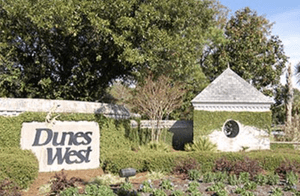
Marketing practices that push the limits of what's appropriate, including promoting developments from entrances serving communities where they no longer have development rights, rather than paying for traditional advertising like other businesses.
None of those examples necessarily violate the law.
But there's a difference between meeting the minimum legal requirement and being a good corporate citizen.
Here's My Question
If Long Savanna requires a $116 million public school, why wasn't that cost built into the development approval?
If the impact fees don't come close to covering it, why don't they?
If Charleston County approves another massive subdivision tomorrow, are taxpayers going to buy that school too?
At some point, growth stops paying for itself and starts asking everyone else to subsidize it.
That's exactly what this referendum looks like.
Before You Vote
Nobody is arguing against schools.
Children deserve great schools.
Teachers deserve modern classrooms.
The issue isn't education.
The issue is whether Charleston County has created a development system where private profits are realized today while public infrastructure costs are socialized tomorrow.
If one development creates the need for a $116 million school, I believe the approval process should have ensured that development—not taxpayers countywide—funded the overwhelming majority of that cost.
Because if growth doesn't pay for growth...
Who does?
Apparently, all of us; no matter whether we want that growth or not!
About Bryan Crabtree
Bryan Crabtree is a Charleston, South Carolina real estate broker, consumer advocate, investor, and business strategist with nearly 30 years of experience in residential real estate, luxury homes, market analysis, and real estate marketing. Having guided thousands of buyers, sellers, and investors through more than a billion dollars in career real estate transactions, Bryan is recognized for his straightforward analysis of housing trends, development, public policy, property values, and the economic issues affecting homeowners throughout the Charleston region.
As a Broker Associate with IndigoOak | Christie's International Real Estate, Bryan specializes in luxury real estate, waterfront homes, historic properties, golf course communities, new construction, and investment real estate throughout Mount Pleasant, Daniel Island, Isle of Palms, Sullivan's Island, Charleston, West Ashley, Johns Island, Summerville, and the surrounding Lowcountry.
Beyond real estate, Bryan writes extensively about growth, infrastructure, taxation, consumer protection, development policy, government accountability, and the financial decisions that shape communities. His commentary combines decades of real-world brokerage experience with data-driven market analysis, offering readers practical insights into how public policy, economics, and development impact homeowners, taxpayers, and property investors.
Bryan is also the host of The Bryan Crabtree Show (watch here), where he discusses real estate, investing, consumer issues, business, and public affairs with an emphasis on helping people make smarter financial and real estate decisions. His work is known for asking difficult questions, challenging conventional thinking, and advocating for transparency, accountability, and common-sense solutions in both government and business.
Whether analyzing Charleston's housing market, evaluating major development proposals, or helping clients navigate complex real estate decisions, Bryan's mission remains the same: to provide honest analysis, trusted advice, and informed perspectives that help consumers protect and grow their wealth through real estate.