By Bryan Crabtree
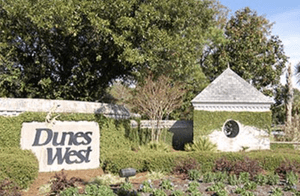
For nearly three decades, I have sold homes throughout North Mount Pleasant. Between Dunes West, Park West, Rivertowne, Carolina Park, and the surrounding communities, I've been involved in hundreds of home sales along the Highway 41 corridor. One thing has remained remarkably consistent over those years: buyers love this part of Mount Pleasant. They love the golf courses, the schools, the natural beauty, the neighborhoods, and the proximity to both Charleston and the beaches.
What they don't love is Highway 41.
That is why the political battle now surrounding Charleston County's $245 million Highway 41 Corridor Improvement Plan matters so much. This is no longer simply an engineering debate or a political disagreement between elected officials. It is a discussion that will influence property values, quality of life, future development, and the long-term desirability of one of the most sought-after real estate corridors in South Carolina.
The current proposal, commonly referred to as the "Road to Compromise," would widen Highway 41 using a 4-3-4 lane configuration, expanding to four lanes before narrowing to three lanes through the historic Phillips Community before widening again. The plan also includes new bicycle and pedestrian paths and construction of the Laurel Hill Parkway, a new connector between Highway 41 and Park West Boulevard. If approved, construction is expected to take approximately four years. Yet despite more than a decade of engineering, environmental studies, public meetings, and revisions, the project remains one of the most controversial transportation proposals Charleston County has undertaken.
Supporters argue the project represents years of compromise and that delaying it further risks losing hundreds of millions of dollars in transportation funding while traffic continues to worsen. Opponents believe the current design unnecessarily impacts Laurel Hill County Park, does not adequately address future growth, and should be reconsidered before taxpayers commit more than $200 million. Both sides make legitimate points, which is precisely why emotions have become so heated.
Mayor Will Haynie recently warned in an opinion column published in the Post and Courier that if Mount Pleasant Town Council rejects municipal consent, Charleston County could lose the opportunity to move forward altogether. He wrote that more than a decade of planning would effectively be discarded, along with approximately $245 million in transportation funding, leaving residents with no meaningful improvements while traffic continues to worsen.
On that particular point, I believe the mayor is raising a legitimate concern.
A July 10 letter from South Carolina Department of Transportation Secretary Justin Powell to Senate Transportation Committee Chairman Larry Grooms appears to reinforce that uncertainty. Powell explains that Highway 41 is not an SCDOT-sponsored project but rather a Charleston County transportation sales tax project. He wrote, "That said, this is not a SCDOT-sponsored project. Should the Town of Mount Pleasant reject municipal consent, any decision on next steps will be that of Charleston County."
That statement matters because many residents have assumed rejecting municipal consent would simply force Charleston County back to the negotiating table with a better alternative. The Secretary's letter suggests the future is far less certain than that. It may ultimately become Charleston County's decision whether to redesign the project, delay it for years, redirect funding elsewhere, or pursue another option entirely. And I believe it's a safe position to say that we, as Mount Pleasant residents, can't trust Charleston County. They've repeatedly demonstrated a pattern of making ill-fated decisions that leave our community dealing with the consequences. Whether it's transportation planning, growth management, or infrastructure, far too often Mount Pleasant ends up carrying the burden while Charleston County moves on to its next priority. That history gives residents every reason to demand accountability before placing the future of Highway 41 entirely in the County's hands.
At the same time, Councilman John Iacofano has asked several thoughtful questions that deserve answers before taxpayers spend nearly a quarter of a billion dollars. Among them is whether alternatives utilizing Bessemer Road were ever fully engineered and objectively compared with the Laurel Hill Parkway alignment, and whether the current project provides sufficient long-term capacity for a corridor expected to experience substantial additional growth over the coming decades. Those are reasonable questions, and taxpayers deserve honest answers before such a significant investment is made.
But I also keep coming back to another question that seems to receive far less attention.
How did we reach a point where simply widening the existing Highway 41 corridor has become almost impossible?
Protecting the Phillips Community is unquestionably important. Its history deserves preservation and respect, and no reasonable person wants to repeat mistakes that harmed historic communities in previous generations. At the same time, this region has changed dramatically over the past twenty-five years. I continue to struggle with the notion that Charleston County cannot find a way to construct a modern four-lane divided roadway with a landscaped median from the Wando Bridge to Highway 17 while minimizing impacts to the Phillips Community. Difficult is not the same thing as impossible, and considering the importance of this corridor, it seems remarkable that this option has become almost untouchable.
There is another issue that deserves far more public discussion, and that is where much of this future traffic is actually coming from.
Kim Blondin Ryals summed it up perfectly in a recent comment:
"What is Berkeley County doing to imporve the situation?"
She's exactly right.
Berkeley County continues approving development on the Cainhoy Peninsula at a pace that is simply unsustainable. Estimates of 10,000 to 12,000 future homes are routinely discussed, yet Mount Pleasant residents are expected to absorb much of the resulting traffic while Charleston County taxpayers pay to address the problem. Regional planning cannot work when one county approves explosive residential growth while another community is left to solve the transportation nightmare it creates.
Even more frustrating is the continued approval of high-density apartment projects throughout Berkeley County. We absolutely need additional housing in the Charleston region, but there is a tremendous difference between building well-planned neighborhoods and allowing dense apartment construction to explode without first ensuring the transportation infrastructure exists to support it. Growth should follow infrastructure—not the other way around. Allowing uncontrolled density while expecting neighboring communities to absorb the consequences is not regional planning; it's poor planning.
On that note, I believe the Town of Mount Pleasant deserves credit for standing firm against another proposal that simply made no sense. The mayor and Town Council were right to reject the proposal that would have dramatically increased residential density around Mount Pleasant Towne Centre. Turning one of Mount Pleasant's premier commercial destinations into another dense residential development would only have added more traffic to an already strained road network. We certainly need more housing, particularly single-family homes that allow families to put down roots in our community, but adding more high-density residential projects without solving our transportation challenges is not the answer.
Ultimately, I believe both sides of the Highway 41 debate have valid concerns. Councilman Iacofano is right to ask whether taxpayers are receiving the best possible long-term transportation investment. Mayor Haynie is equally correct that indefinitely delaying action could leave Mount Pleasant with no improvements at all while traffic continues to deteriorate and construction costs continue climbing. His point that doing nothing is likely the worst possible outcome deserves serious consideration.
As someone who has spent almost thirty years helping families buy and sell homes throughout this corridor, I know Highway 41 is already one of the first concerns buyers raise when considering North Mount Pleasant. They continue to love Dunes West, Park West, Rivertowne, Carolina Park, and the surrounding communities because they offer an exceptional quality of life. Yet almost every serious conversation eventually turns to commute times, congestion, and whether the traffic is only going to get worse.
That is why this debate extends far beyond asphalt and engineering drawings. It is about protecting one of the strongest residential markets in the Charleston region. Real estate values are directly tied to accessibility, quality of life, and confidence in a community's future. If we continue allowing explosive growth in neighboring counties without demanding meaningful regional infrastructure improvements, homeowners in North Mount Pleasant will eventually pay the price through longer commutes, greater congestion, and increasing buyer hesitation.
Highway 41 Expansion FAQ: What Mount Pleasant Residents Want to Know
What is the current Highway 41 plan?
Charleston County's current $245 million "Road to Compromise" would widen Highway 41 to a 4-3-4 lane configuration, add bicycle and pedestrian facilities, improve major intersections, and construct the Laurel Hill Parkway connecting Highway 41 to Park West Boulevard. The project is designed to reduce congestion while minimizing impacts to the historic Phillips Community and surrounding environmentally sensitive areas.
Why is the project so controversial?
The controversy centers on balancing three competing priorities: reducing congestion, protecting the historic Phillips Community, and preserving Laurel Hill County Park. Some residents believe the current compromise doesn't provide enough long-term capacity, while others believe it goes too far in affecting protected land. The result has been years of public meetings, redesigns, lawsuits, environmental reviews, and political debate.
What happens if Mount Pleasant withholds municipal consent?
That remains one of the biggest unknowns. According to SCDOT Secretary Justin Powell, Highway 41 is a Charleston County transportation sales tax project—not an SCDOT project. If municipal consent is denied, Charleston County, not SCDOT, would determine the next steps. Those options could include redesigning the project, delaying construction, pursuing legal remedies, or reallocating funding, but no specific path is guaranteed.
Will Highway 41 traffic continue getting worse if nothing is built?
Almost certainly. Both supporters and critics of the current proposal generally agree that traffic volumes will continue increasing as thousands of additional homes are constructed on the Cainhoy Peninsula and surrounding areas. The disagreement is not whether Highway 41 needs improvement—it's what those improvements should look like.
Why does Berkeley County keep coming up in this discussion?
Many Mount Pleasant residents believe traffic problems on Highway 41 are being accelerated by rapid residential development occurring across the Wando River in Berkeley County. As thousands of new homes are approved in the Cainhoy area, much of that commuter traffic ultimately funnels toward Mount Pleasant and Highway 41. That has led many residents to question whether regional infrastructure planning is keeping pace with regional growth.
Will the Highway 41 project affect property values?
Transportation infrastructure has always influenced residential real estate values. Reduced congestion, improved accessibility, and shorter commute times generally make communities more attractive to buyers. Conversely, worsening traffic can discourage buyers and affect how neighborhoods compete in the marketplace. While no one can guarantee future home values, Highway 41 is unquestionably one of the most significant quality-of-life issues affecting North Mount Pleasant today.
Will homes or businesses be taken for the project?
Yes. Charleston County has identified numerous properties requiring partial right-of-way acquisition for the project, although the amount of land affected varies considerably from property to property. The current compromise was developed in part to reduce impacts compared with earlier alternatives.
Why not simply widen the existing Highway 41 to four lanes all the way?
That question is at the center of today's debate. Supporters of widening the existing corridor argue it provides the most direct long-term solution. Opponents point to impacts on the Phillips Community, environmental permitting challenges, historic preservation concerns, and right-of-way acquisition issues. Whether those obstacles make such a project impossible—or simply more difficult—remains one of the most heavily debated questions in the entire process.
How long would construction take?
If the current project moves forward without major redesigns or legal delays, construction is expected to take approximately four years. Additional delays in approvals or redesign could extend that timeline.
Why should homeowners care?
Because Highway 41 is no longer simply a transportation project. It affects commute times, emergency response, school travel, business access, future development, and ultimately the desirability of neighborhoods throughout North Mount Pleasant. Whether you support the current proposal or believe it should be redesigned, the decisions made today will influence the area's quality of life—and real estate values—for decades to come.
What is the Phillips Community?
The Phillips Community is one of the oldest historic African American settlement communities in the Charleston region. Established in the 1870s by formerly enslaved men and women after the Civil War, the community grew into a thriving neighborhood of farmers, tradesmen, business owners, churches, and families whose descendants still own much of the land today. In 2023, the Phillips Community was added to the National Register of Historic Places because of its historical and cultural significance.
Why is the Phillips Community historically important?
Unlike many communities established after the Civil War, the Phillips Community has remained remarkably intact for more than 150 years. Many current property owners are descendants of the original families who settled there following emancipation. It represents an important chapter in South Carolina's history and serves as a rare example of a historic freedmen's settlement that has survived rapid suburban development. For that reason, many residents and preservation advocates believe every effort should be made to protect the community while still addressing modern transportation needs.
Highway 41 is no longer simply a transportation project. It has become one of the defining issues affecting the future of North Mount Pleasant real estate values. My hope is that whatever decision is ultimately made, it reflects not only today's political realities but a transportation strategy capable of serving this region for the next fifty years—not merely the next fifteen.
About Bryan Crabtree
Bryan Crabtree is one of the Charleston area's most experienced real estate professionals, with 27 years of experience, more than 5,500 real estate transactions, and over $1 billion in career sales volume. A longtime Dunes West resident, Bryan has spent decades helping buyers and sellers navigate the ever-changing North Mount Pleasant market, including Dunes West, Park West, Rivertowne, Carolina Park, Cainhoy, and the Highway 41 corridor.
Known for combining deep market knowledge with data-driven analysis, Bryan has successfully guided clients through multiple real estate cycles, including the housing downturn of 2008 and today's shifting market. His expertise extends beyond pricing homes—he regularly analyzes infrastructure, development, zoning, and transportation issues that directly impact home values throughout the Charleston region.
Bryan is an individual agent with IndigoOak Christie's International Real Estate and publishes regular market analysis through TheRealEstateExperts.com, where he provides practical insight into Charleston real estate, local development, and the economic trends shaping the Lowcountry housing market.