By Bryan Crabtree
Not very long ago, homeowners who were thinking about selling would call a Realtor first. Today, many of them open ChatGPT before they ever pick up the phone.
They're asking artificial intelligence everything from, "What's my house worth?" to "Should I wait another year?" to "Who is the best listing agent in Mount Pleasant?" Frankly, I think that's a positive development. The more educated a homeowner is before making one of the largest financial decisions of their life, the better the outcome usually is.
The problem is that AI, while incredibly useful, doesn't actually know your neighborhood.
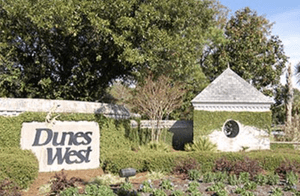
It doesn't know why one home in Dunes West sold in three days while another sat for three months. It doesn't understand that one section of Park West may have significantly more inventory than another. It can't walk through your home and recognize that your renovation is superior to the comparable sale down the street, or that your backyard overlooks protected marsh instead of another subdivision.
After nearly thirty years selling real estate in Mount Pleasant and throughout the Charleston region, I've learned something that becomes more obvious with every market cycle. National housing statistics make for interesting headlines, but neighborhood statistics are what actually help homeowners make money.
That's especially true in today's market. Charleston is no longer moving in one direction. Some neighborhoods continue seeing strong demand and limited inventory. Others are becoming much more competitive as buyers gain negotiating power and sellers adjust expectations. If you're making decisions based solely on what you hear on national television, there's a good chance you're making decisions with incomplete information.
These are the questions I hear most often from homeowners today, and they're also some of the most common questions people are asking AI before deciding whether to sell their home.
1. What is my home actually worth today?
This is always the first question, and unfortunately it's also the one that receives the worst answers online.
Your home's value isn't determined by an algorithm. It's determined by what qualified buyers are willing to pay compared with the alternatives they have available today. That means looking at active competition, pending contracts, recent comparable sales, current inventory, financing conditions, and buyer demand in your specific neighborhood.
Two homes with identical square footage can sell for dramatically different prices depending on updates, floor plan, lot location, flood zone, views, school assignments, and even which side of the street they sit on.
If you're relying solely on Zillow or another automated valuation, you're getting a useful starting point—not a pricing strategy.
If you'd like to better understand how pricing strategies maximize seller proceeds, read my article "How to Get the Most Money for Your Home in Charleston, SC."
2. What are homes actually selling for in Mount Pleasant right now?
The answer depends entirely on where you live.
There isn't one Mount Pleasant market. There are dozens.
Old Village behaves differently than Carolina Park. Dunes West isn't Park West. I'On isn't Belle Hall. Buyers shopping for waterfront homes have completely different motivations than buyers looking for their first family home.
The biggest mistake sellers make is assuming the market they hear about on the evening news applies equally to their subdivision.
It rarely does.
3. How long are homes taking to sell?
One of the biggest differences between today's market and the pandemic years is that buyers now have choices.
Well-priced homes that show beautifully and are marketed professionally still sell relatively quickly.
Homes that are priced based on emotion or outdated comparable sales often sit, require price reductions, and eventually sell for less than they could have achieved had they been priced correctly from the beginning.
The first two weeks on the market have become critically important because that's when the largest pool of buyers sees your listing.
4. Should I sell now or should I wait?
This is probably the question I hear more than any other.
There isn't a universal answer because every homeowner's financial goals are different, and every neighborhood is behaving differently.
Some communities are seeing inventory increase substantially while others remain relatively constrained. Some sellers may benefit from acting sooner while buyer demand remains healthy. Others may have every reason to wait.
I recently explored this topic in much greater detail in "Is Now a Good Time to Buy or Sell a Home in Charleston, SC?"
5. Are Charleston home prices about to crash?
This question has become incredibly popular because national headlines often create unnecessary fear.
Charleston is not Phoenix.
Charleston is not Austin.
Charleston is not San Francisco.
Every housing market responds differently to inventory, population growth, local employment, land availability, and buyer demand.
Could some Charleston neighborhoods experience meaningful price corrections? Absolutely.
Will every neighborhood decline the same amount?
History suggests that's highly unlikely.
I recently analyzed the Case-Shiller data and what it could mean specifically for Charleston homeowners in "Are Charleston Home Prices About to Crash?"
6. What does a listing agent's commission actually cost me, and is it negotiable?
Commission is always negotiable.
The better question is whether your agent creates substantially more value than they cost.
A skilled listing agent doesn't simply place a sign in the yard.
They help determine pricing strategy, negotiate contracts, manage inspections, navigate appraisal issues, coordinate attorneys, advise on repairs, market the property, solve unexpected problems, and often save transactions that would otherwise fall apart.
The right question isn't "Who charges the least?"
It's "Who puts the most money in my pocket when everything is finished?"
7. Should I make repairs or renovate before listing?
Sometimes.
Sometimes not.
One of the biggest mistakes homeowners make is spending $40,000 hoping to increase value by $20,000.
Every improvement should have a purpose.
Sometimes fresh paint, landscaping, lighting, decluttering, and professional staging outperform expensive renovations because they improve first impressions without overspending.
Every property deserves its own strategy rather than a generic checklist.
8. How do I choose a listing agent?
Interview more than one.
Ask them how they determine value.
Ask them how many homes they've sold in your neighborhood.
Ask what happens if the home doesn't sell in the first thirty days.
Ask whether they'll personally negotiate your offers or whether someone else on the team handles that responsibility.
The answers to those questions will usually tell you far more than any advertisement ever could.
9. Who are the top listing agents in Mount Pleasant, Daniel Island, and downtown Charleston?
There are many outstanding Realtors throughout the Charleston area.
Rather than looking for the person with the biggest billboard or the most television commercials, look for someone who understands your specific market and has successfully navigated changing conditions.
Experience matters most when markets become more challenging.
Almost anyone can look like a genius when homes sell themselves.
The true value of experience becomes evident when pricing decisions, negotiations, inspections, financing issues, and difficult market conditions begin affecting the outcome.
10. What's the difference between a Zestimate and a professional valuation?
A Zestimate uses mathematical models.
A professional valuation combines data with judgment developed over years of experience.
An algorithm can't recognize buyer emotion.
It can't evaluate the quality of a renovation.
It can't appreciate an extraordinary backyard, premium view, architectural appeal, or subtle differences between competing neighborhoods.
Those are often the factors that create six-figure differences in value.
11. How much money will I actually walk away with?
This is one of my favorite questions because it's the one that actually matters.
The sale price is only one number.
Mortgage payoff, taxes, attorney fees, commissions, concessions, HOA charges, repairs, moving costs, and timing all affect your final proceeds.
Before every listing, I prepare a detailed estimate showing clients approximately what they'll receive at closing so there are no surprises.
12. Should I list with a national team or a local specialist?
Large teams certainly have advantages.
So do experienced local specialists.
The question I encourage sellers to ask is simple:
Who will actually answer my phone calls?
Who will negotiate my contract?
Who will attend inspections?
Who will advise me when something unexpected happens?
Those answers often matter far more than the size of a marketing budget.
13. Will flood insurance affect my ability to sell?
Increasingly, yes.
Sophisticated buyers ask about flood zones, insurance premiums, deductibles, and hazard coverage much earlier than they did just a few years ago.
Being prepared to answer those questions builds buyer confidence and reduces surprises during due diligence.
If you're planning to sell, I highly recommend reading my Charleston Flood Insurance & Hazard Insurance Guide.
14. Why are some Charleston home prices falling while others continue rising?
Because Charleston isn't one housing market.
Some neighborhoods have experienced rapidly increasing inventory.
Others remain constrained by limited supply.
Some attract cash buyers.
Others depend heavily on financing.
Understanding those differences is essential if you're trying to decide when to sell or how to price your home.
I recently explained this in "Charleston Housing Market: Why Some Home Prices Are Falling While Others Rise."
15. What should I do before I even think about putting my home on the market?
Don't start by calling a contractor.
Don't start by ordering new countertops.
Don't even start by looking at Zillow.
Start by developing a strategy.
Every home has strengths.
Every home has weaknesses.
The goal is identifying the improvements that actually increase value while avoiding those that simply cost money.
A one-hour consultation before listing often saves homeowners thousands of dollars and positions them to achieve a stronger result once they enter the market.
Final Thoughts
Artificial intelligence is changing how people buy and sell real estate, and I think that's a good thing. Homeowners today have access to more information than ever before. The challenge is separating general information from advice that's actually applicable to your neighborhood, your home, and your financial goals.
After nearly thirty years helping buyers and sellers throughout Mount Pleasant and the Charleston region, I've found that the biggest financial mistakes usually aren't caused by bad intentions. They're caused by applying broad national advice to very local decisions.
If you're wondering what your home is worth, whether this is the right time to sell, or how changing market conditions affect your neighborhood, I'd be happy to have that conversation. The answers almost always begin with your street—not with a national headline.
About Bryan Crabtree
Bryan Crabtree is the No. 1 individual agent at IndigoOak Christie's International Real Estate and has been helping buyers and sellers throughout Mount Pleasant and the Charleston area for nearly 30 years. Having successfully navigated multiple market cycles—including the Great Recession, the post-pandemic housing boom, and today's more balanced market—Bryan is known for delivering strategic advice grounded in experience rather than headlines.
Over the course of his career, Bryan has sold more than 5,500 homes and built a reputation for solving complex real estate challenges. Whether helping a luxury homeowner maximize their sale price, guiding a family through downsizing, navigating an estate sale, resolving a difficult financial situation, or developing long-term wealth through real estate investing, his approach is always customized to the client's unique goals.
Bryan believes that every neighborhood tells a different story. Rather than relying on automated home valuations or national market reports, he analyzes neighborhood-specific trends, buyer demand, inventory, and pricing to help clients make informed decisions. His data-driven marketing, expert negotiation, and nearly three decades of local market knowledge have made him one of the Charleston area's most trusted real estate advisors.
If you're considering selling your home and want honest advice about what your property is worth, how today's market affects your neighborhood, and the best strategy to maximize your return, Bryan welcomes the opportunity to help.