By Bryan Crabtree
For more than a decade, Charleston has appeared again and again on lists ranking the best cities in the United States. Publications such as Condé Nast Traveler, Travel + Leisure, and Southern Living have repeatedly named Charleston among the country’s most desirable places to visit—and increasingly, to live. Travel + Leisure readers alone have voted Charleston the No. 1 city in the United States multiple times, often praising its historic beauty, culinary scene, and coastal lifestyle.
But glossy travel accolades only tell part of the story. Anyone considering a move to Charleston eventually asks a more practical question: what is everyday life actually like here? Like any place, Charleston has both strengths and frustrations. For many residents, the things that make the city special are also the things that make it complicated.
A Lifestyle Built Around Water
If you love water, Charleston is difficult to beat. The geography of the region defines daily life in ways that are hard to replicate anywhere else in the United States.
Charleston sits at the intersection of two major rivers—the Ashley and the Cooper—which merge into one of the most beautiful natural harbors on the East Coast before flowing into the Atlantic Ocean. Surrounding this harbor is a complex network of tidal creeks, marshes, barrier islands, and inland waterways. Residents often describe Charleston less as a city than as a collection of peninsulas and islands connected by bridges.
For boaters and sailors, the harbor is world-class. The entrance to the Atlantic is wide, deep, and easily navigable, making Charleston a popular destination for offshore sailors moving along the East Coast. From the harbor, boaters can access nearby beaches, barrier islands, and miles of tidal rivers that wind through the Lowcountry marshes.
Fishing is another defining part of life here. Redfish, speckled trout, flounder, tarpon, and offshore species draw anglers year-round. Many residents keep small boats or flats skiffs to explore the creeks and estuaries. Others venture offshore for tuna, mahi-mahi, and billfish.
The popularity of boating has created its own challenge. Marinas across the Charleston area are often full, expensive, and difficult to access. Boat storage, dockage, and lift slips have become some of the most sought-after—and costly—assets in the region. Many longtime residents believe Charleston will eventually need far more marine infrastructure to keep up with demand.
A City That Loves to Celebrate
Charleston also thrives on events. The calendar rarely slows down, especially in the spring and fall.
Events like the Spoleto Festival USA, the Charleston Wine + Food Festival, and the Cooper River Bridge Run attract visitors from across the country. Smaller neighborhood festivals, art walks, farmers markets, and outdoor concerts fill in the spaces between the major events.
In a typical year there is rarely a weekend without something happening. From sailing regattas to cultural festivals to historic tours, Charleston offers a steady stream of activities that keep the city lively even outside peak tourist seasons.
This constant energy is part of the city’s appeal. Residents often describe Charleston as a place where it is easy to stay active socially and culturally. There is always another event, another concert, another restaurant opening, or another reason to get out of the house.
One of the Best Food Cities in America
Charleston’s culinary reputation has grown dramatically over the past two decades. What was once a regional food scene rooted in traditional Lowcountry cooking has evolved into one of the most celebrated restaurant cultures in the country.
Publications like Bon Appétit, Food & Wine, and The New York Times have praised Charleston’s restaurants for combining historic Southern traditions with modern culinary creativity. Chefs draw inspiration from the region’s seafood, rice culture, and Gullah-Geechee heritage while introducing global influences that reflect Charleston’s growing international audience.
Restaurants such as Husk, FIG, The Ordinary, and numerous newer establishments have turned Charleston into a destination for food tourism. In many ways the city now competes with major culinary capitals like Las Vegas, New York, and Chicago in terms of restaurant quality and innovation.
The downside, of course, is price. Charleston’s best restaurants can be expensive, and dining out regularly adds quickly to the cost of living. For residents who love food, however, the city offers an extraordinary variety of options.
The Reality of Traffic
No discussion of Charleston would be complete without mentioning traffic. It is one of the most common complaints among residents.
Charleston’s geography, which makes the city so beautiful, also creates transportation challenges. The peninsula and surrounding islands are connected by a limited number of bridges and major roads. As the region has grown, those routes have become increasingly congested.
Rush hour can be frustrating, particularly for people commuting across rivers or traveling between suburbs and downtown. The key to living comfortably in Charleston is often choosing a home location carefully. Many residents eventually discover that living close to daily activities—work, school, groceries, recreation—makes an enormous difference in quality of life.
Those who manage to shorten their commute often find Charleston far more enjoyable than those who spend long hours navigating traffic.
The Cost of Living
Charleston is not a cheap place to live, and housing costs are a major reason why.
Home prices in the region have risen dramatically over the past two decades, particularly in desirable areas like Mount Pleasant, downtown Charleston, and coastal communities. The median home price in Charleston County now sits well above the national average.
Some residents describe the housing market as overpriced relative to local wages, a common criticism in cities that attract wealth from outside regions. Buyers relocating from major metropolitan areas often find Charleston relatively affordable, while longtime residents sometimes struggle to keep pace with rising prices.
Living in the suburban “bubble”—areas with the newest schools, largest homes, and most amenities—can be particularly expensive. Mount Pleasant and Daniel Island, for example, command some of the highest home prices in the region.
However, Charleston also offers alternatives for those willing to compromise. Communities farther from the historic core or outside the most competitive neighborhoods can provide more affordable options while still allowing residents to enjoy the city’s culture, restaurants, and waterfront lifestyle.
Schools: A Mixed Picture
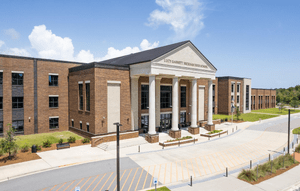
Education is another topic that often comes up when people consider moving to Charleston. The reality is that school quality varies significantly depending on location.
Some schools in the region are highly regarded and attract families specifically seeking strong public education options. Others struggle with funding challenges or performance issues that have existed for decades.
As a result, many families choose their neighborhoods carefully based on school zoning. Private schools and charter schools also play an important role in the region’s educational landscape.
Like many cities experiencing rapid growth, Charleston continues working to balance population expansion with improvements in public education.
The Compression of a Growing City
Charleston’s popularity has created a phenomenon many residents call “compression.”
The peninsula itself is relatively small, surrounded by water and historic preservation restrictions that limit large-scale development. As more people move to the region, activity concentrates within a limited space.
Some residents find this density frustrating. Busy sidewalks, crowded restaurants, and packed beaches can make the city feel more intense than it once did.
Others find the same compression energizing. Charleston offers the ability to “hide in plain sight.” A person can live quietly in a historic neighborhood while still being surrounded by culture, nightlife, and outdoor recreation just a few minutes away.
For many residents, that balance is exactly what makes the city special.
So, Is Charleston a Good Place to Live?
For people who value waterfront living, cultural energy, and historic character, Charleston can be an extraordinary place to call home. Few cities combine natural beauty, architecture, food, and outdoor recreation in quite the same way.
At the same time, the city requires trade-offs. Housing costs are high, traffic can be frustrating, and rapid growth has changed the character of some neighborhoods.
Yet Charleston continues attracting new residents because it offers something increasingly rare: a sense of place. The city’s history, waterways, and culture create an environment that feels distinct rather than interchangeable with other metropolitan areas.
In the end, whether Charleston is a good place to live often comes down to priorities. For those who embrace its lifestyle and accept its quirks, Charleston can feel less like a destination and more like a long-term home.